A comment I hear often when showing the electronic music I listen to new people. Partially I think this is because they have an untrained ear. After researching ‘The effect of Phonological similarity’, it might explain why it all sounds the same, and why it takes longer for people with untrained ears to recognise the difference.
I plan to apply this to my experiments.
Wednesday, July 23, 2008

One-2-3-four-5
Five main findings provide evidence for the phonological loop:
- The effect of phonological similarity:
Lists of words that sound similar are more difficult to remember than words that sound different. Semantic similarity (similarity of meaning) has comparatively little effect, supporting the assumption that verbal information is coded largely phonologically in working memory. - The effect of articulatory suppression:
Memory for verbal material is impaired when people are asked to say something irrelevant aloud. This is assumed to block the articulatory rehearsal process, thereby leaving memory traces in the phonological loop to decay. - Transfer of information between codes:
With visually presented items, adults usually name and sub-vocally rehearse them, so the information is transferred from a visual to an auditory code. Articulatory suppression prevents this transfer, and in that case the above mentioned effect of phonological similarity is erased for visually presented items. - Neuropsychological evidence:
A defective phonological store explains the behaviour of patients with a specific deficit in phonological short-term memory. Aphasic patients with dyspraxia are unable to set up the speech motor codes necessary for articulation, caused by a deficiency of the articulatory rehearsal process. - On the other hand, patients with dysarthia, whose speech problems are secondary, show a normal capacity for rehearsal. This suggests that it is the subvocal rehearsing that is crucial.
Thursday, July 17, 2008
Jerry Wilson - memory article
Found this article about memory, few notable quotes.
"I have more than 30 hours of home movies! Sometimes I wonder if the memories my kids have of their younger days are of the actual events, or of the video tape playback."
"But just as our muscles will atrophy if they are not used, memories will weaken and die if they are not remembered...The key to keeping a memory is the frequency of its use."
http://wilstar.com/OverCoffee/oc-memories.htm
"I have more than 30 hours of home movies! Sometimes I wonder if the memories my kids have of their younger days are of the actual events, or of the video tape playback."
"But just as our muscles will atrophy if they are not used, memories will weaken and die if they are not remembered...The key to keeping a memory is the frequency of its use."
http://wilstar.com/OverCoffee/oc-memories.htm
Alexander Smith
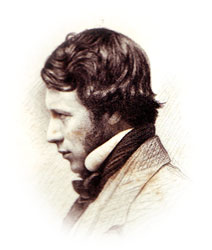
"A man's real possession is his memory. In nothing else is he rich, in nothing else is he poor."
Rainbow ink spot of music in you brain
 This is what happens when we hear music, well sort of.
Music is heard by the ear and then the sensory cells in the Organ of Corti and then recognized by the auditory cortex within the brain
Musical Memory
“Musical experience improves the brain’s ability to make sense out of the information it gets from your ear,” said neurobiology Prof. Nina Kraus, director of NU’s Auditory Neuroscience Laboratory and senior author of the study. The results from the year-long study will appear in the April issue of Nature Neuroscience.
Taken from - http://www.claritaslux.com/blog/2007/04/17/music-is-closely-connected-with-language-learning/
Taken from - http://www.claritaslux.com/blog/2007/04/17/music-is-closely-connected-with-language-learning/
Wednesday, July 16, 2008
What was he thinking?

"Boulevard du Temple", taken by Louis Daguerre in late 1838 or early 1839, was the first-ever photograph of a person. It is an image of a busy street, but because exposure time was over ten minutes, the city traffic was moving too much to appear. The exception is a man in the bottom left corner, who stood still getting his boots polished long enough to show up in the picture.
So this was the first man every photographed, I wonder what memory of his was captured in this photo.
Subscribe to:
Posts (Atom)